Overview
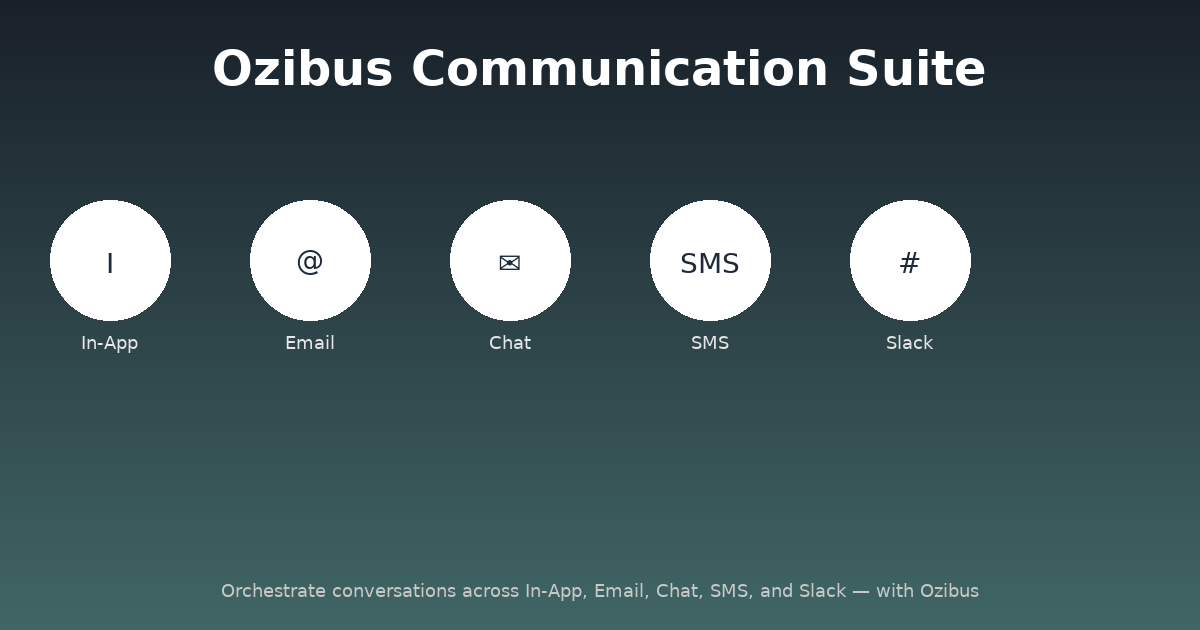
In an age where customers expect immediate, context-aware responses across their preferred channels, businesses need more than point solutions — they need a unified communication platform. Ozibus offers a suite of products designed for modern teams: Ozibus In‑App, Ozibus Mailer, Ozibus Chat, Ozibus SMS Gate, and Ozibus SlackBridge. Together, these channels form a flexible, secure, and measurable toolkit for engaging customers, automating workflows, and keeping teams aligned.
Why a Channel‑First Product Strategy?
Customers don’t consume communication uniformly. Some prefer the convenience of in‑app notifications; others reply to email, tap out an SMS, or expect real‑time chat. A channel‑first product strategy treats each medium as a first‑class product — optimized for its strengths, integrated with a shared context layer, and instrumented for metrics and governance. Ozibus’ approach balances specialized channel features with a single source of truth for message state, identity, and auditability.
Product Snapshot
-
Ozibus In‑App: Rich notifications, contextual inboxes, and deep linking that keeps users in your product flow.
-
Ozibus Mailer: Template engine, delivery retries, open/click tracking, DKIM/SPF support, and per‑tenant reputation controls.
-
Ozibus Chat: Real‑time messaging with presence, typing indicators, attachments, and agent routing.
-
Ozibus SMS Gate: Global SMS routing with carrier health checks, failover, and two‑way messaging support.
-
Ozibus SlackBridge: Bi‑directional integration to map conversations and alerts into Slack channels while preserving context and compliance.
Deep Dives
Ozibus In‑App
Built for retention and product engagement, Ozibus In‑App provides:
-
Persistent user inbox and ephemeral banners.
-
Actionable cards (approve, pay, reply) with deep links to product screens.
-
Prioritization rules and quiet hours per user or region.
Best for transactional confirmations, onboarding nudges, and feature announcements where re‑engagement matters.
Ozibus Mailer
Email remains critical for receipts, regulatory notices, and longer customer narratives. Ozibus Mailer focuses on deliverability and developer ergonomics:
-
A robust template system with variable substitution, preview, and A/B testing.
-
Intelligent retry/backoff and per‑recipient queuing to prevent a single bad address from blocking delivery.
-
Tracking, bounce handling, and analytics dashboards for deliverability health.
Ideal for billing, legal notices, and content‑heavy communication.
Ozibus Chat
Real‑time support and collaboration, with features tuned for operations teams:
-
Multi‑agent routing and skill‑based assignment.
-
Message threads, attachments, transcripts, and Canned Responses.
-
Integration points for CRM enrichment and automated bots.
Use cases: live customer support, internal ops chat, and guided onboarding.
Ozibus SMS Gate
For instant, high‑visibility messages, SMS is unmatched. Ozibus SMS Gate offers:
-
Regional carrier routing with latency and success metrics.
-
Two‑way support and short code provisioning strategies.
-
Rate limiting and DNC lists for compliance.
Best for OTPs, urgent alerts, and users without reliable data connectivity.
Ozibus SlackBridge
Many teams live in Slack. SlackBridge converts relevant conversations and production alerts into Slack channels while keeping canonical records in Ozibus:
-
Channel mapping and thread linking that preserve message context.
-
Role‑based permissions and audit trails for regulatory needs.
-
Slash commands to trigger actions back in Ozibus systems.
Great for internal incident response, developer alerts, and cross‑team collaboration.
Unified Architecture — Context, Routing, and State
Ozibus is built around three principles:
-
Context Layer — A shared message model that includes user identity, conversation state, channel metadata, and breadcrumbs for traceability.
-
Routing & Orchestration — A rules engine decides channel preference, fallback flows (e.g., In‑App → Email → SMS), and rate controls.
-
State & Telemetry — All messages and events are logged for replay, auditing, and analytics. This allows accurate SLA reporting and backtrace capable of reconstructing a full conversation across channels.
Technically, services communicate via well‑defined APIs and event streams. The orchestration layer is idempotent and supports distributed workers for per‑recipient queuing.
Privacy, Security & Compliance
Ozibus products treat privacy as foundational:
-
End‑to‑end encryption where feasible, with envelope encryption for stored payloads.
-
Role‑based access control, field‑level masking, and WORM storage options for retention policies.
-
Compliance modules (GDPR, CCPA, PCI‑adjacent guidance) and configurable data residency controls.
For regulated messages (billing notices, legal notices), Ozibus enforces signature, archival, and audit logging requirements.
Developer Experience & Extensibility
Developers interact with Ozibus through:
-
A unified REST API and SDKs (Node, PHP, Python) for sending messages, managing templates, and reading conversation state.
-
Webhooks for delivery, open, click, and inbound events.
-
A sandbox environment that mirrors production routing rules and carrier behaviors.
The platform favors observable defaults: every send returns a message ID, status endpoints, and trace IDs for debugging.
Observability & KPIs
Measure what matters: delivery rate, time‑to‑delivery, first response time (for chat), conversion lift (for in‑app banners), and cost per delivered message (for SMS). Ozibus provides dashboards and raw data exports so teams can correlate channel performance with revenue and churn metrics.
Packaging & Product Strategy
Ozibus sells channels as composable product modules:
-
Core: In‑App + Chat + basic Mailer (templates + transactional sends).
-
Comms Pro: Adds advanced Mailer features, SMS Gate with regional coverage, and analytics.
-
Enterprise: Full SLAs, dedicated IPs, on‑prem or VPC deployment options, and SlackBridge.
This approach helps teams start with in‑product engagement and add high‑visibility channels as their needs grow.
Real‑World Use Cases
-
Onboarding flows that start with in‑app tips, escalate to email for long‑form guides, and use SMS for critical verifications.
-
Incident response where monitoring alerts map into Slack via SlackBridge and customer status updates are sent in‑app and by email.
-
High‑volume marketplaces that use per‑recipient queuing to keep deliveries fast while protecting reputation.
Conclusion
A modern communication strategy must be channel‑aware, context‑driven, and observable. Ozibus’ product suite treats each medium as a product — optimized for its strengths and integrated through a resilient orchestration layer. The result: conversations that are timely, secure, and measurable, and that ultimately build trust between businesses and their customers.